Work
Services
Guides
Short answer. Most people look and sound better on camera than they expect. They don't need to be natural presenters, and they don't need to get it right in one take. Choose the format that suits them, give them notice and a short chat beforehand, ask good questions on the day, and give them all the time they need. Whether you're working with a production company, a freelancer or filming in-house on a phone, the same things make people comfortable.
Asking a busy executive, a nervous engineer or a customer to go on camera can feel like the hardest part of making a video. It doesn't need to be. This guide covers how to choose the right format, how to prepare people, how to ask the questions, and how to set up so people feel at ease.
There are three main ways to get someone talking on camera.
An interview is a conversation with someone off camera. They ask the questions and the person answers in their own words, looking at the interviewer rather than the lens. It suits most people: customers, subject experts, team members and leaders talking about their own work. The questions disappear in the edit, and the answers carry the story.
An on-screen conversation puts the person asking the questions in the frame too. It works best when that person is someone familiar, such as a colleague, a manager or a regular host, in an informal setting like a lounge area, a cafe table or a walk around the site. Talking to someone they know, most people relax quickly and speak the way they normally would. It suits series content, leadership conversations, customer chats and social clips especially well.
A teleprompter puts a script in front of the lens, so the person speaks straight to the viewer. It suits messages that need to be said exactly, such as an announcement or a policy update, and people who present regularly. With a practice read and the scroll set to their pace, it can sound natural.
If you're unsure, start with an interview. For people who find the camera daunting, a conversation with someone they know is often the easiest way in.
Choose people who know the subject and care about it. Enthusiasm comes through on camera far more than polish.
Give them notice. A week or two ahead, tell them what the video is for, who will watch it and roughly how long you'll need them. Surprises are what make people nervous.
Share topics, not a script. For interviews and conversations, send the themes or questions in advance so they can think about their answers. Tell them not to memorise anything: memorised answers sound stiff. For teleprompter pieces, share the script early, write it the way they speak, and get it approved before the day.
Have a short chat beforehand. Ten or fifteen minutes on the phone with whoever will be asking the questions makes a big difference. They get to know each other, the person hears the kind of questions coming, and the day feels familiar before it starts.
Sort out approvals early. If legal, compliance or the executive team need to agree on what's said, do it before filming, so nobody has to come back and say it again.
Whoever is asking the questions, whether that's a producer, a colleague or you, has more influence on how someone comes across than anything else on the day.
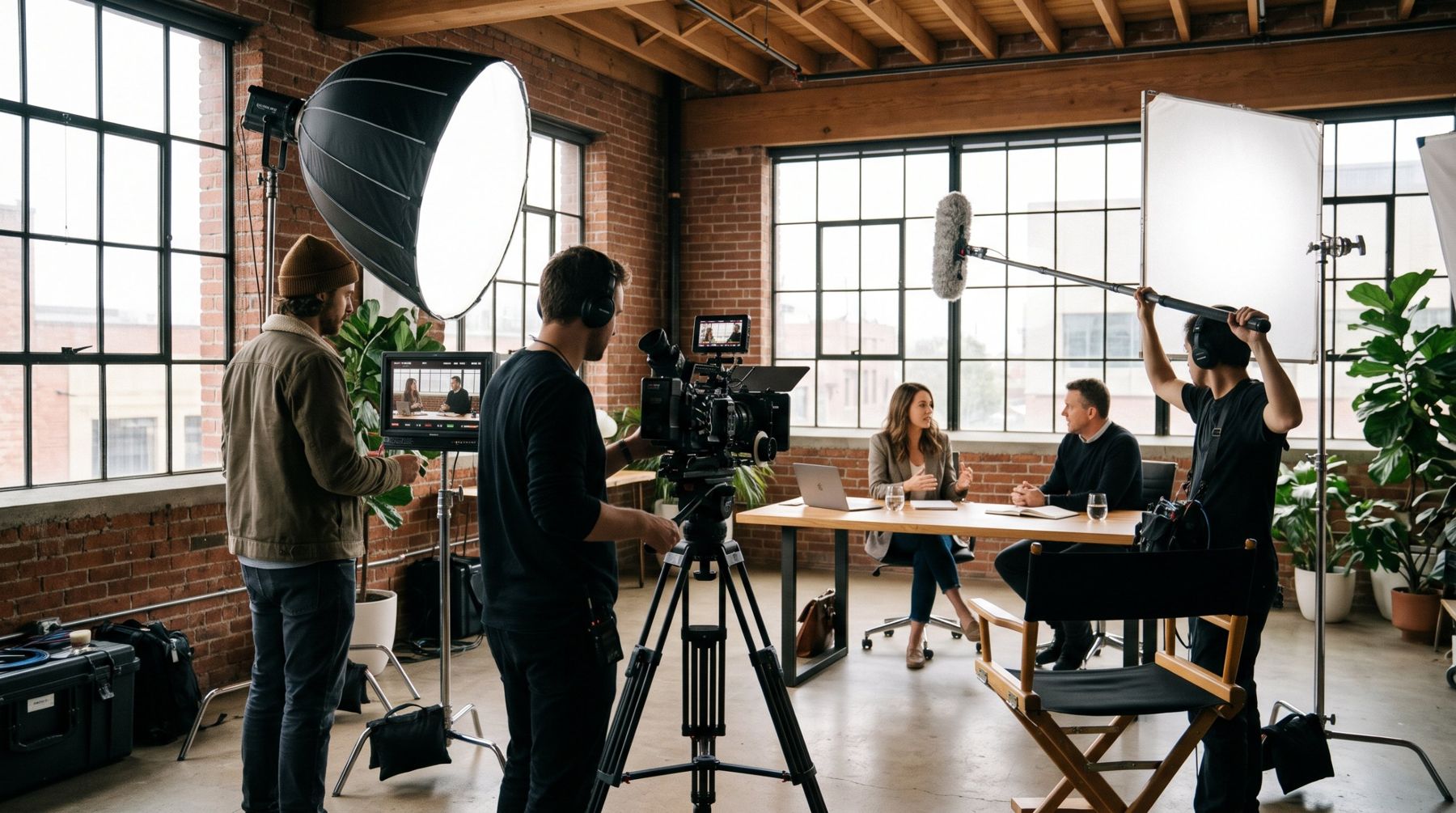
Set up before they arrive, so they walk into a calm room rather than a scramble of lights and cables.
Keep the room small. One person from marketing plus whoever is filming is usually enough. The fewer people watching, the more relaxed most people are.
If you're filming in-house, a few basics make a big difference:
Leaders are usually short on time, so plan their slot carefully, have everything set up before they arrive and tell them roughly when they'll be finished. Thirty to forty-five minutes is typical for an interview. Agree the two or three points they most want to make beforehand. Even the busiest people relax once they realise there's no rush and they can go again whenever they want.
Customers are doing you a favour, so make it easy for them. Film at their workplace where you can, share the topics in advance, keep it to an hour, and make sure they've agreed to appear and to how the video will be used. A thank-you afterwards, with a link to the finished video, goes a long way.
A good production team should do much of this for you: talking to people before the day, preparing the questions, setting up before anyone arrives, and taking the time to make people comfortable on set. It's what our producers and crews do on every project at yourfilm, and it's worth asking any production company how they prepare the people appearing in your videos.
Give them notice, share the topics rather than a script, and have a short chat with whoever will ask the questions. On the day, start with easy questions, give them time, and let them go again as often as they need.
No. Nothing is live, and people can go again as many times as they need. The best answers often come once they've relaxed.
Often, yes. A familiar colleague or host in the frame, in an informal setting, turns the interview into a real conversation, and most people relax quickly when they're talking to someone they know.
Yes. Sharing the questions or topics helps people think about their answers. Ask them not to memorise anything, so it still sounds like a conversation.
Solid, mid-tone colours, with no fine stripes or small patterns, and a second option to choose from on the day.
Choose a quiet room, face the person towards soft window light, use a clip-on microphone, put the camera at eye level on a tripod and do a short test recording before you start.
That's normal. A chat beforehand, a calm setup, a familiar face asking the questions and plenty of time on the day help most people relax within a few minutes.
Talk to us, or send the brief if you have one ready.